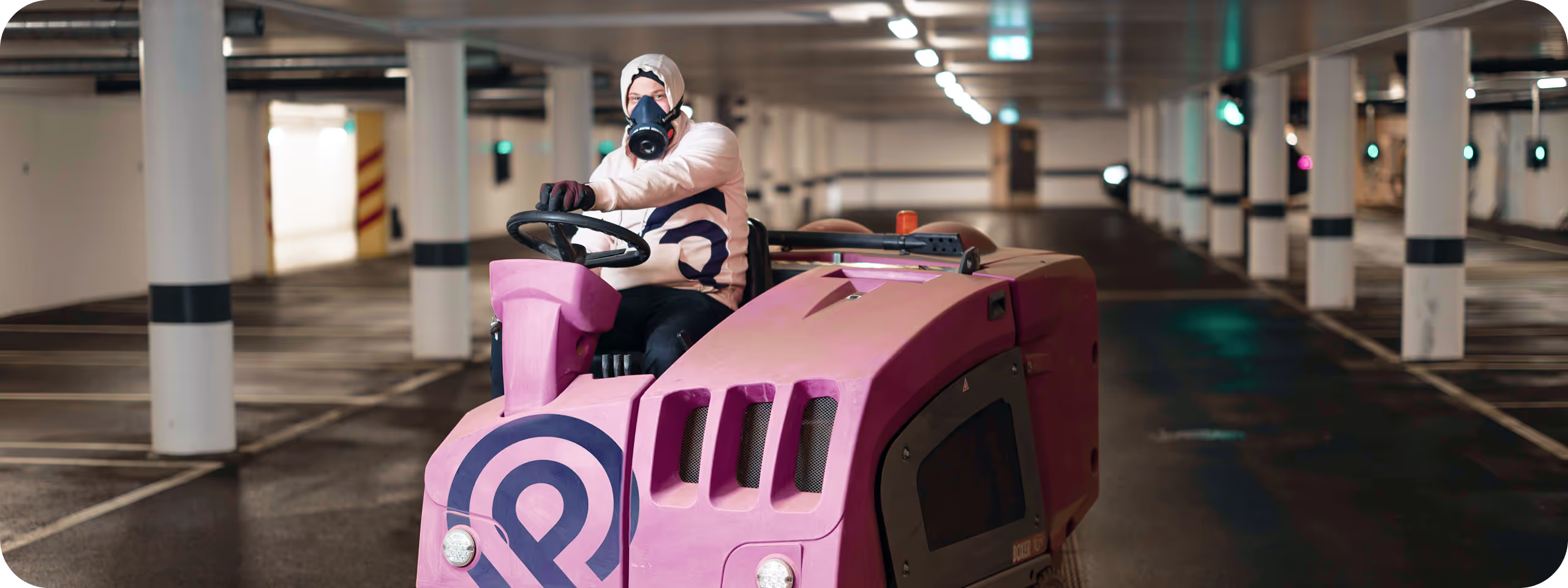
Garage cleaning

Keep your parking facilities clean, safe and representative — all year round
Clear garage illustration
Parkit’s garage cleaning is more than just a tidy-up. It’s a critical service that helps maintain safety, aesthetic appeal and property value — all handled by professionals you can trust. This is our most popular service, relied upon by housing associations, commercial property owners and municipalities across Sweden.
Garage cleaning

Performed by trained Parkit professionals

certificate icon
High standards of cleaning
In most regions, cleanings are carried out by Parkit's own service team — specialists equipped with modern, eco-efficient cleaning machines.

For regions outside our direct reach, we work exclusively with Parkit-certified partners who meet our high standards.
thumbs-up icon
Proven efficiency
Let’s keep your garage clean, on time and stress-free. Whether on-demand or by subscription, our goal is the same: impeccable results, clear communication, minimal disruption.

Ready to work with Parkit’s garage cleaning?

Book a garage cleaning
PRICING

Plans for all scales

On-demand cleaning
Need to do parking cleaning, but not sure how often? This option is perfect for you.
Includes:
Dry and wet sweeping
Customer must ensure garage is fully emptied
On-demand bookings are lower priority than subscriptions and depend on available time slots.
Annual subscription
Suitable for small parking lots that require regular cleaning.
Includes:
Dry and wet sweeping
50% off transportation fee
Recurring booking handled by Parkit
Automatic resident notifications via Service Alerts
Biannual Subscription
Ideal for high-traffic or larger facilities.
Includes:
2 scheduled cleanings per year
50% off transportation fee
Recurring booking handled by Parkit
Automatic resident notifications via Service Alerts
All communication handled by Parkit
Extra services

On request

Need something special? Let us know and we’ll make it happen. Available as part of any visit or booked on demand.
Available services:
Ceiling pipe & ventilation cleaning
Wall & pillar wash-down
Garage door/door surface cleaning
Why choose Parkit?

Get started with garage cleaning today

Book a garage cleaning
shield icon
Proven efficiency
Trusted by hundreds of BRFs and property owners
thumbs-up icon
Customer satisfaction
Cleaner environments = fewer complaints & better retention
Badge of dataflow
Seamless integrations
Automated and integrated with your Parkit system
file icon
Transparent reporting
Full reporting & scheduling transparency

Book a garage cleaning

Thank you!
Your message has been received!
Oops! Something went wrong while submitting the form.
ready to help

Frequently asked questions

Garage Cleaning in Practice
What does professional garage cleaning include?
Professional garage cleaning involves removing loose gravel, dust, dirt and other contaminants from parking areas in a controlled way.
‍
At Parkit, the work may include both dry and wet sweeping. Depending on the facility, walls, pillars, gates, pipes and other parts of the parking environment can also be cleaned.
‍
The goal is not simply to move dirt around. It should be removed from the surface.
How often should a parking garage be cleaned?
There is no single schedule that works for every garage. Traffic levels, season, ventilation, number of parking spaces and the amount of dirt brought into the facility all affect how frequently cleaning is needed.
‍
For many properties, a thorough cleaning after winter is a good starting point, as gravel, salt and dirt may have accumulated for several months. High-traffic garages may require additional cleaning during the year.
‍
Regular maintenance is generally easier to plan than waiting until the garage has become so dirty that a much larger intervention is required.
What is the best time of year to clean a garage?
Spring is often particularly important.
‍
During winter, vehicles bring large amounts of gravel, salt, slush and road dirt into parking facilities.
‍
However, heavily used garages may also need cleaning at other times of the year. The level of use should ultimately determine the cleaning schedule rather than the calendar alone.
Do all vehicles need to be moved?
To clean the entire floor area effectively, parking spaces normally need to be accessible.
‍
Vehicles left in place create areas that cleaning equipment and staff cannot reach.
‍
It is a bit like vacuuming your living room without ever moving the sofa.
‍
Clear communication with tenants, residents and users is therefore an important part of planning the cleaning.
How long does garage cleaning take?
This depends on several factors, including: the size of the garage, the number of parking spaces, accessibility, the amount of dirt present, the level of cleaning required.

The work is therefore planned based on the specific conditions of each facility.
Dust and Particles
What is all the dust in a parking garage actually made of?
It is not simply ordinary household dust.

A parking environment can contain particles from: tyres, brakes. road surfaces, gravel and sanding material, road salt, dirt carried in by vehicles, vehicle exhaust emissions.

Traffic therefore creates several different types of particles, even when there are no visible leaks or spills.
What do you mean by micro-dust in a garage?
“Micro-dust” is not a precise scientific term, but it can be used to describe the very small particles found among the visible dirt in a traffic environment.
‍
Some particles are small enough to become airborne and be inhaled.
‍
What appears to be a thin grey layer on the floor may therefore contain much more than ordinary dust.
Where do these small particles come from?
Vehicles generate particles through normal use.
‍
Wear occurs between:
  • tyres and road surfaces
  • brake pads and brake discs
  • tyres and the surrounding road environment
In addition, sand, salt, dirt and other materials are carried into the garage on tyres and underneath vehicles.
‍
Over time, these materials accumulate on the floor and in corners, ramps and drainage areas.
Does the problem disappear when everyone drives electric vehicles?
No.
‍
Electric vehicles eliminate tailpipe emissions from the vehicle itself, which is an important improvement, but tyres, road surfaces and brakes still experience wear.
‍
This means that particles from tyres, brakes and road surfaces will continue to exist even as vehicle fleets become increasingly electric.
‍
An electric garage is not automatically a dust-free garage.
Can garage dust be harmful to breathe?
That depends on the type of particles present, their concentration and the duration of exposure.
‍
Very small traffic-related particles can reach the respiratory system.
‍
This is particularly relevant for people who spend longer periods working in parking facilities, such as service staff, parking personnel, technicians and other contractors.
‍
Garage cleaning should not, however, be seen as a replacement for adequate ventilation or other occupational health measures.
Can garage cleaning improve air quality?
Cleaning can reduce the amount of loose dust and particulate matter on the floor that may otherwise become airborne when vehicles pass.
‍
However, cleaning alone cannot solve every air-quality issue.
‍
Ventilation, traffic levels, vehicle types and other factors also influence the indoor environment.
‍
One way of looking at it is that ventilation manages what is already in the air, while cleaning reduces the layer of material on the ground that may otherwise continue to be stirred up.
Drains, Water and Runoff
Why does so much dirt collect around floor drains?
Water naturally carries gravel, sludge and other particles towards the lowest points of the garage.
‍
Drains and drainage channels therefore become natural collection points for material brought into the facility by vehicles.
Can dirt in a garage block the drains?
Yes.
‍
Gravel, sludge, leaves and other debris can accumulate in and around drains and reduce their ability to carry water away.
‍
When water can no longer drain as intended, it may begin to collect on the garage floor.
‍
What started as a cleaning issue can quickly become an operational problem.
Can’t you simply wash the dirt down the drain?
No — and this is one of the most important misunderstandings surrounding garage cleaning.
‍
A drain is part of a drainage system, not a waste bin.
‍
Cleaning should focus on collecting and removing dirt rather than simply transporting it from the floor into the drainage system.
‍
How contaminated cleaning water and other material should be handled depends on the property, the drainage system and applicable local requirements.
Isn’t an oil separator enough?
An oil separator has a specific purpose, but it is not a universal treatment system for everything found on a garage floor.
‍
Gravel, sludge and contaminated cleaning water still need to be handled correctly.
‍
Just because something can physically flow into a drain does not mean that it belongs there.
Fire and Safety
Is a dirty garage a fire risk?
Not automatically.
‍
Ordinary gravel and mineral dust do not make a garage inherently flammable.
‍
The risk becomes more relevant when parking areas also begin to be used as storage spaces and combustible materials such as cardboard boxes, furniture, packaging or waste accumulate.
‍
A well-managed garage should therefore not only be clean, but also kept free from unnecessary combustible materials.
Can garage cleaning reduce fire risk?
Garage cleaning does not replace systematic fire safety management.
‍
However, a clean and organised environment makes it easier to:
  • identify combustible materials and waste
  • keep walkways and technical installations visible
  • detect leaks and abnormalities
  • identify problems before they are hidden by dirt or clutter
Cleaning therefore supports the environment around fire safety rather than replacing fire safety measures themselves.
Does EV charging mean garages need to be cleaned more often?
Charging stations themselves do not create a greater need for floor cleaning.
‍
However, charging infrastructure introduces additional technical equipment into the garage.
‍
A clean and organised environment makes it easier to inspect charging areas, cabling, protective equipment and surrounding surfaces.
‍
The main benefit is visibility and control.
Health and Working Environment
Who is most affected by a dirty garage?
Most visitors only spend a few minutes in a garage.
‍
For people who work there regularly — such as maintenance personnel, service technicians, parking staff and contractors — exposure can be significantly longer.
‍
That is one reason why a garage should not only be viewed as somewhere vehicles are stored.
‍
It can also be a workplace
Is visible dust the biggest problem?
Not necessarily.
‍
The largest particles are often the easiest to see.
‍
Smaller particles can be much harder to detect with the naked eye.
‍
A garage therefore does not need to look extremely dirty to contain a significant amount of fine particulate matter.
‍
Waiting until the floor is covered in gravel is a little like waiting for the warning light to appear before servicing your car.
Maintenance and Costs
Can a dirty garage cause other maintenance problems?
Yes.
‍
Dirt makes the building itself more difficult to inspect.
‍
Once floors, walls, pillars and drainage areas have been cleaned, it becomes easier to identify issues such as:
  • cracks
  • leaks
  • standing water
  • damaged road markings
  • damage to pillars
  • drainage problems
  • damage around gates and technical installations
A clean garage therefore provides better conditions for inspection and preventative maintenance.
Why is road salt a problem in garages?
During winter, salt and slush are carried into parking facilities by vehicles.
‍
The material then accumulates together with water, dirt and gravel.
‍
This makes spring cleaning particularly important and gives the property owner a better opportunity to inspect floors, drainage systems and other exposed surfaces after winter.
Can garage cleaning reduce future maintenance costs?
Garage cleaning cannot guarantee lower maintenance costs.
‍
However, regular cleaning makes it easier to identify abnormalities early and reduces the amount of material left to accumulate in the environment over long periods of time.
‍
And small problems are generally more pleasant to discover before they have had time to develop their own business plan.
Common Misconceptions
“It’s only a garage. Why does it need to be that clean?”
Because it is still part of the property.
‍
For many residents, tenants, customers and visitors, the garage is also the first part of the building they encounter.
‍
An impressive entrance above ground and a neglected garage two floors below tell two very different stories about the same property.
“We sweep it ourselves occasionally. Isn’t that enough?”
For basic ongoing maintenance, it may be.
‍
However, larger parking facilities often contain more dirt, particles and difficult-to-access areas than can easily be handled without professional equipment and a structured cleaning process.
‍
The difference is mainly one of scale, equipment and control.
“The garage doesn’t look particularly dirty. Do we really need to clean it?”
It is often better to look at how the garage is used than simply how it looks.
‍
High traffic levels can result in large amounts of fine material accumulating even when the floor does not appear visibly dirty.
‍
Drains, corners, ramps and areas near entrances may also collect significantly more dirt than the most visible parts of the garage.
“Can’t we just wait until someone complains?”
Of course.
‍
In much the same way that you can wait to replace a light bulb until someone walks into the wall.
‍
But property management is usually easier when maintenance is planned before users need to point out that something needs attention.
Benefits of Regular Garage Cleaning
What is the main benefit of cleaning a parking garage regularly?
There is not really just one.
‍
Regular garage cleaning can contribute to:
  • less gravel, dust and dirt
  • better conditions for drainage
  • easier detection of damage and leaks
  • a better maintained parking environment
  • clearer markings, signage and installations
  • a better working environment for people working in the garage
  • a better first impression for users
Most importantly, the parking environment becomes easier to manage.
Is garage cleaning a cost or a maintenance measure?
It is, of course, a cost.
‍
But it makes more sense to compare garage cleaning with planned property maintenance than with ordinary office cleaning.
‍
A garage is a heavily used traffic area that may also contain significant technical infrastructure and valuable equipment.
Maintaining that environment is therefore not simply cosmetic.
‍
It is part of property management.
What is the difference between having a clean garage and having control?
A garage can be clean on Tuesday and dirty again a few weeks later.
‍
Control means knowing:
  • when cleaning should take place
  • how often it is needed
  • how users should be informed
  • which areas require extra attention
  • how drains and runoff are functioning
  • which abnormalities are being identified
That is why Parkit views garage cleaning as part of parking operations — not as an isolated cleaning service.
Does Your Garage Need a Review?
We help property owners, housing associations and businesses assess their needs and create a cleaning solution suited to their parking facility.
‍
Book a free consultation about garage cleaning.

Book a free consultation

Free of charge, we will show you how to use Parkit system, answer your questions, suggest a suitable tariff
Book a consultation